The global fashion industry is at a crossroads. For decades, the “take-make-waste” model defined success, but today, a new era of eco-innovation is taking hold. Leading this charge are organic apparel manufacturers, who are no longer just focused on what goes into a garment, but what happens to the waste created during and after its life.
In 2026, eliminating textile waste isn’t just a PR move it’s a technical necessity driven by circular design and cutting-edge
sustainable clothing practices.
Before understanding the solution, it’s important to grasp the scale of the problem. The fashion industry generates enormous amounts of waste at every stage from raw material sourcing to textile manufacturing processes and post-consumer disposal.
Fast fashion has accelerated this issue. Low-cost garments are produced in bulk, worn only a few times, and then discarded. This leads to:
1. Overflowing landfills
2. Increased pollution from synthetic fibers
3. Wasted water and energy resources
4. Harmful chemical residues in ecosystems
This is where organic apparel manufacturers step in with a completely different approach one that prioritizes sustainability from start to finish, similar to how leading
textile exporters from India are evolving toward eco-conscious production.
Unlike conventional production, organic apparel manufacturing focuses on environmentally responsible materials and processes. These manufacturers use natural fibers such as organic cotton, hemp, bamboo, and linen grown without harmful pesticides or synthetic fertilizers.
But the difference doesn’t stop at raw materials.
Organic apparel manufacturers also:
1. Use low-impact dyes and natural coloring techniques
2. Minimize water consumption during processing
3. Avoid toxic chemicals in fabric treatment
4. Follow ethical labor practices
This holistic approach ensures that sustainability is embedded into every step of the production cycle, significantly reducing waste generation.
Eco-innovation refers to the development of products and processes that significantly decrease environmental impact. For organic apparel manufacturers, this means moving beyond basic sustainability into
zero-waste production and closed-loop systems.
One of the most impactful innovations introduced by organic apparel manufacturers is zero-waste design. Traditional garment production often wastes up to 15% of fabric during cutting and pattern making.
Zero-waste design flips this model.
Designers create patterns that utilize the entire fabric, leaving little to no scraps behind
clothing manufacturer.
Techniques include:
1. Puzzle-like pattern cutting
2. Modular garment construction
3. Multi-functional clothing pieces
This approach not only reduces textile waste but also encourages creativity and innovation in fashion design.
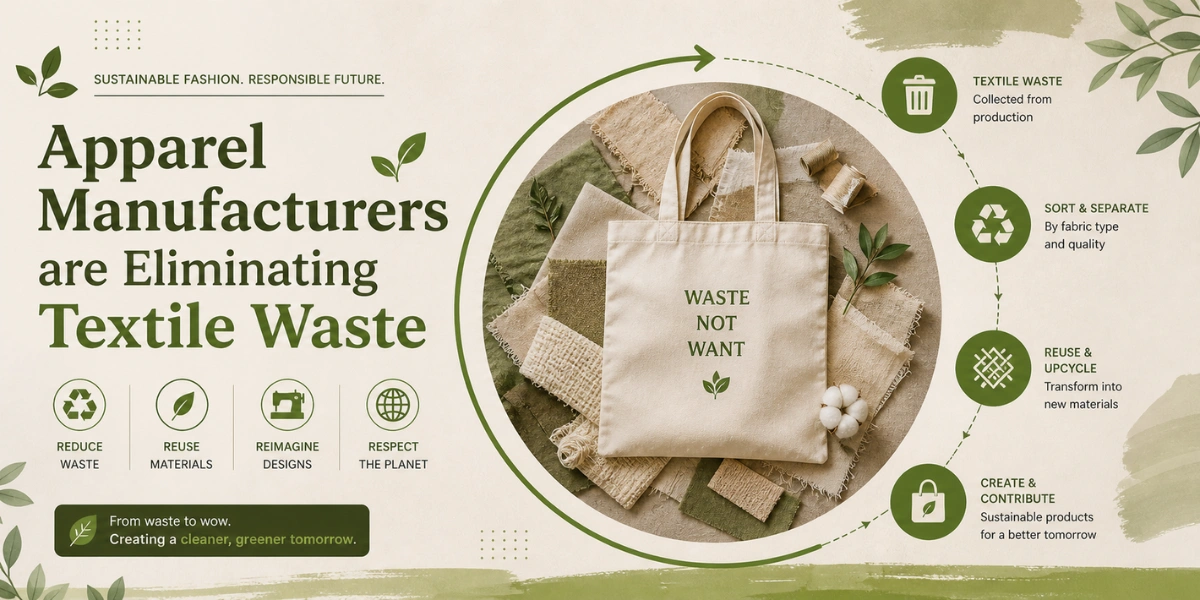
Even with efficient production, some waste is inevitable. However, organic apparel manufacturers are solving this through textile recycling and innovation.
Scraps and offcuts are collected and processed into new yarns or fabrics. These recycled materials are then used to create fresh garments, reducing the need for virgin resources.
Instead of breaking down materials, upcycling involves transforming fabric waste into new products such as:
1. Accessories (bags, pouches, scarves)
2. Patchwork garments
3. Home décor items
This not only reduces waste but also adds unique value to each product.
A major breakthrough in sustainable fashion is the adoption of closed-loop systems. In this model, waste is continuously recycled back into the production process.
1. Collecting post-consumer garments for recycling
2. Converting old textiles into new fibers
3. Designing products that are easier to recycle
Closed-loop systems ensure that materials stay in circulation for as long as possible, drastically cutting down landfill waste.
Innovation in textiles is another area where organic apparel manufacturers are making a significant impact.
Organic fabrics naturally decompose without releasing harmful toxins. This means that even at the end of a garment’s life cycle, it doesn’t contribute to long-term environmental damage.
Some manufacturers are now investing in regenerative agriculture practices, which not only reduce harm but actively restore soil health and biodiversity.
Fabrics made from banana fibers, orange peels, and even algae are gaining popularity. These materials utilize agricultural waste, turning it into wearable fashion.
Reducing textile waste isn’t just about materials it’s also about smarter production.
Organic apparel manufacturers are adopting:
1. Digital pattern-making to reduce errors
2. On-demand production to avoid overstock
3. Automated cutting technologies for precision
4. Waterless dyeing techniques
Sustainability doesn’t end at manufacturing it extends to how consumers interact with clothing.
Many organic apparel manufacturers are educating their customers about:
1. Buying less but choosing better
2. Caring for garments to extend lifespan
3. Recycling or returning old clothing
This shift toward conscious consumption plays a crucial role in reducing textile waste globally.
Eliminating textile waste requires collaboration. Organic apparel manufacturers are working closely with:
1. Farmers growing organic raw materials
2. Designers focused on sustainable fashion
3. Retailers promoting eco-friendly products
4. Recycling companies handling post-consumer waste
This interconnected ecosystem ensures that sustainability is maintained at every stage of the supply chain.
To build trust and accountability, many organic apparel manufacturers adhere to global sustainability certifications such as:
These certifications ensure that environmental and ethical standards are consistently met.
Transparency is also becoming a priority. Brands are now sharing detailed information about their sourcing, production, and waste management practices, allowing consumers to make informed choices.
While progress is impressive, the journey isn’t without challenges.
1. Higher production costs compared to conventional methods
2. Limited availability of organic raw materials
3. Consumer price sensitivity
4. Lack of widespread recycling infrastructure
Despite these hurdles, organic apparel manufacturers continue to innovate and scale sustainable solutions, proving that eco-friendly fashion is not just a trend but a necessity.
The future of fashion lies in circularity, innovation, and responsibility. As technology advances and awareness grows, organic apparel manufacturers will play an even bigger role in shaping a waste-free industry.
Key trends to watch include:
1. AI-driven sustainable design
2. Blockchain for supply chain transparency
3. Advanced textile recycling technologies
4. Increased adoption of rental and resale models
These developments will further reduce textile waste and move the industry closer to true sustainability.
Eco-innovation is transforming the fashion landscape, and organic apparel manufacturers are at the forefront of this change. By embracing sustainable materials, zero-waste design, recycling systems, and ethical practices, they are actively eliminating textile waste and redefining what fashion can be.
For brands, partnering with organic apparel manufacturers is no longer just an option it’s a strategic move toward sustainability and long-term growth. For consumers, choosing organic apparel means supporting a cleaner, greener future.
As the industry continues to evolve, one thing is clear: sustainable fashion isn’t just about looking good it’s about doing good for the planet.